Mornings in midlife can feel heavier than they once did. Between work, family, changing hormones, and the quiet reality that our bodies don’t bounce back like they did at 25, it’s easy to start the day stiff, tired, or already stressed.
But what if your mornings could feel different? What if, in less than 30 minutes, you could stretch away the tension of sleep, boost your energy, and set a calm, intentional tone for the day ahead?
That’s exactly what this gentle morning yoga routine is designed to do. In this 30-minute morning yoga flow, you’ll move through gentle yoga poses that increase flexibility, improve circulation, and calm your mind. Whether you’re in your 40s, 50s, or beyond, this practice is simple, effective, and created to meet you right where you are.
👉 Bonus: You only need a yoga mat, your breath, and a willingness to treat yourself with kindness. For extra comfort, a non-slip mat and a set of yoga blocks can make the practice more supportive.
Why Gentle Morning Yoga Works (Especially After 40)
Gentle yoga in the morning is like pressing the reset button on your body and mind. Research shows that even short sessions:
- Improve circulation and reduce stiffness after hours of sleep.
- Support joint health and mobility, which is especially important as we age.
- Boost parasympathetic activity, shifting you from stress to calm.
- Encourage mindfulness, helping you step into your day with intention instead of reactivity.
- Lower stress and anxiety levels, setting the tone for emotional resilience.
And the best part? You don’t need to devote an hour. This flow takes under 30 minutes and includes nine foundational poses that gently awaken your body.
The 9-Posture Morning Flow
Each posture is paired with its Sanskrit name, its benefits, and easy-to-follow instructions.
1. Neck Stretches — Kantha Sanchalana (2–3 minutes)
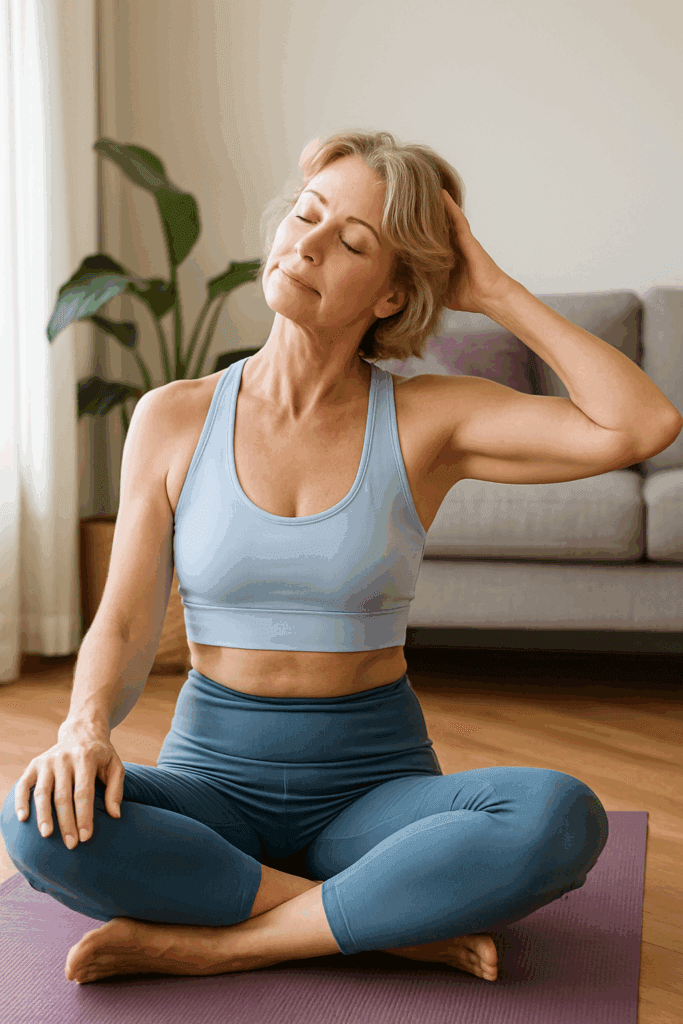
Benefits: Releases tension in the neck and shoulders, gently awakens the spine, and reduces headaches caused by tightness.
- Sit comfortably, spine tall.
- Tilt right ear toward right shoulder, hold 15–20 sec. Switch sides.
- Drop chin to chest, hold.
- Tilt head back gently, hold.
Repeat 2–3 times with deep breaths.
2. Shoulder Rolls — Skandha Chakra (1–2 minutes)
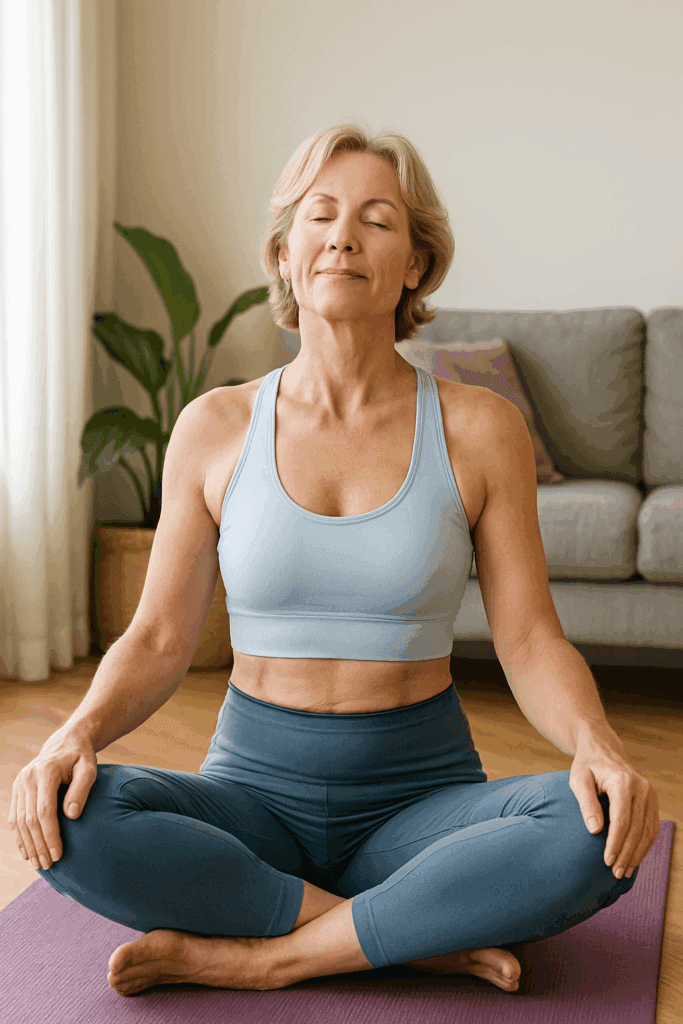
Benefits: Improves shoulder mobility, loosens upper-body stiffness, and opens the chest.
- Sit or stand tall.
- Roll shoulders forward in big circles for 30 sec.
- Reverse backward for 30 sec.
Repeat twice.
3. Seated Cat-Cow — Upavistha Marjaryasana-Bitilasana (3–4 minutes)
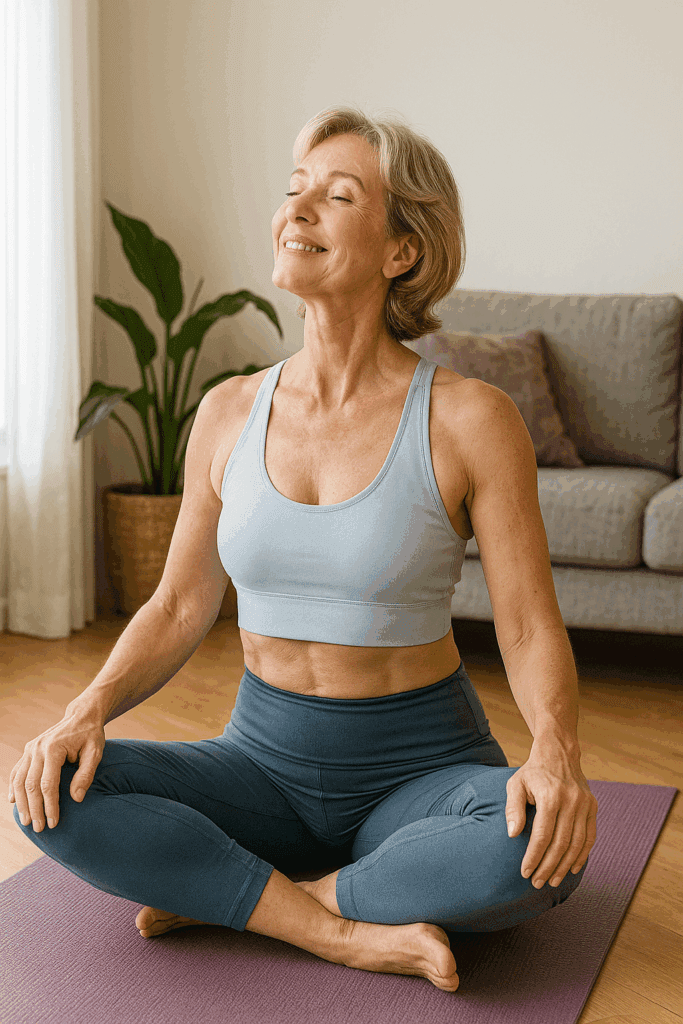
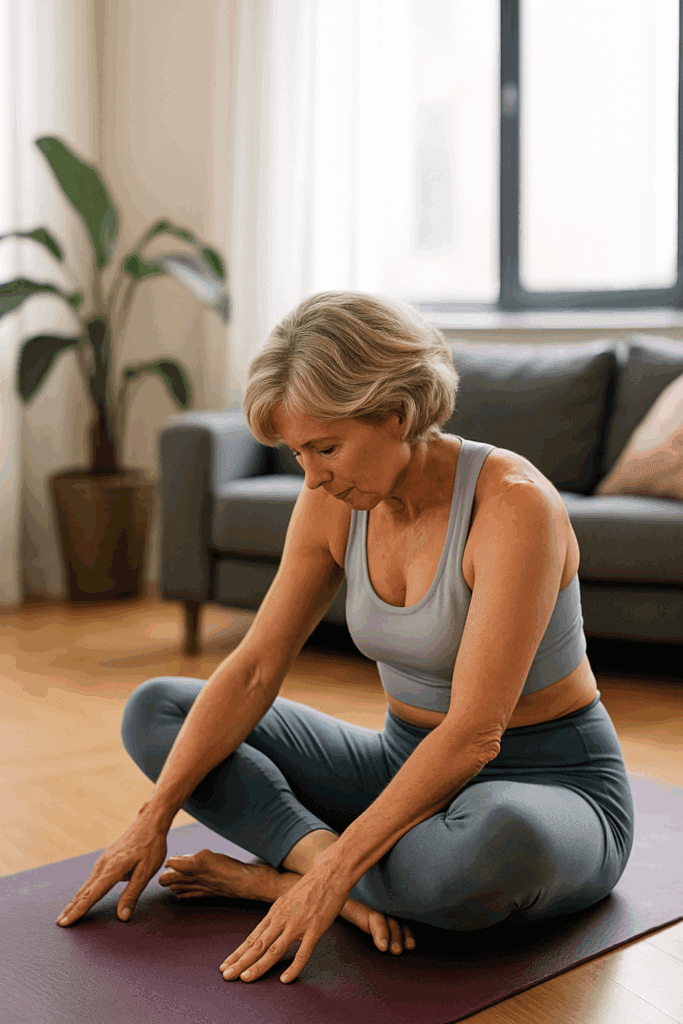
Benefits: Wakes up the spine, massages abdominal organs, and relieves back tension.
- Sit cross-legged, hands on knees.
- Inhale: arch spine, lift chest, gaze up (Cow / Bitilasana).
- Exhale: round spine, chin to chest (Cat / Marjaryasana).
Flow 8–10 rounds with breath.
4. Standing Forward Bend — Uttanasana (3 minutes)
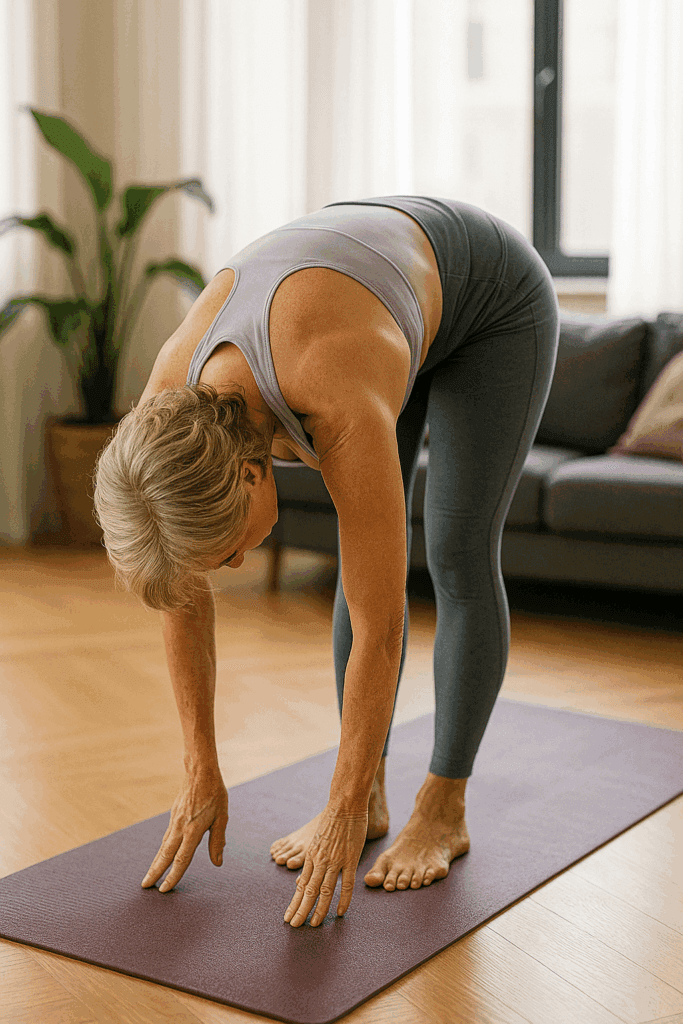
Benefits: Lengthens hamstrings and spine, calms the nervous system, grounds the mind.
- Stand feet hip-width apart.
- Hinge at the hips, fold forward.
- Arms hang or hold opposite elbows.
- Bend knees slightly if needed.
Hold 30–60 sec, roll up slowly.
5. Seated Forward Fold — Paschimottanasana (3–4 minutes)
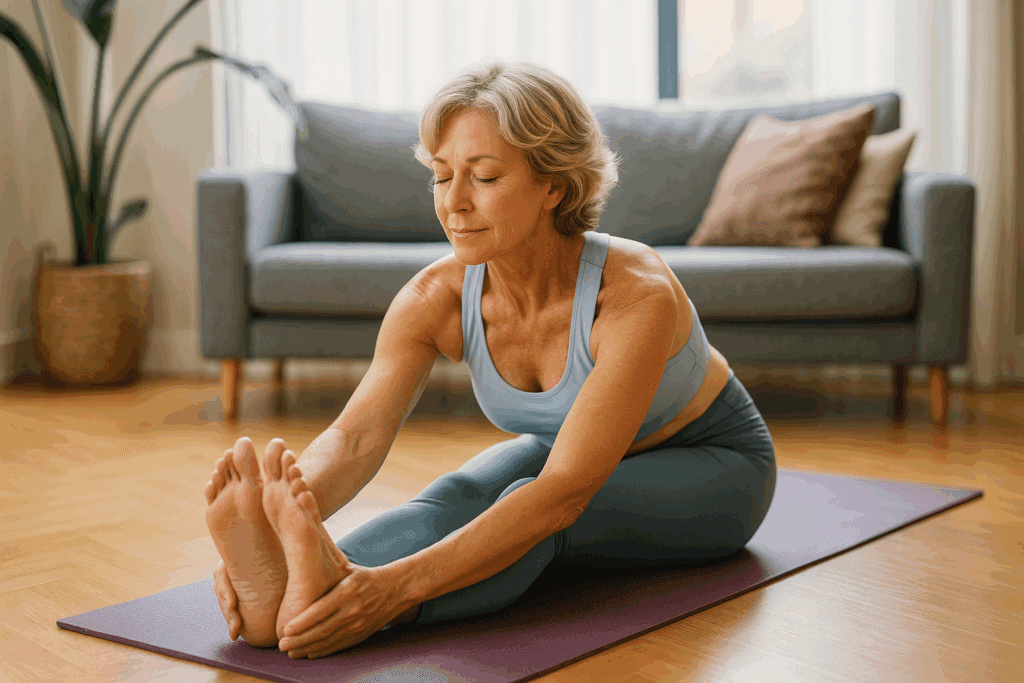
Benefits: Stretches hamstrings, back, and calms the mind. Encourages inward focus.
- Sit with legs extended.
- Inhale: arms overhead.
- Exhale: hinge at hips, fold forward, reach for toes/shins.
- Keep spine long.
Hold 1–2 min, breathe deeply.
6. Butterfly Stretch — Baddha Konasana (2–3 minutes)
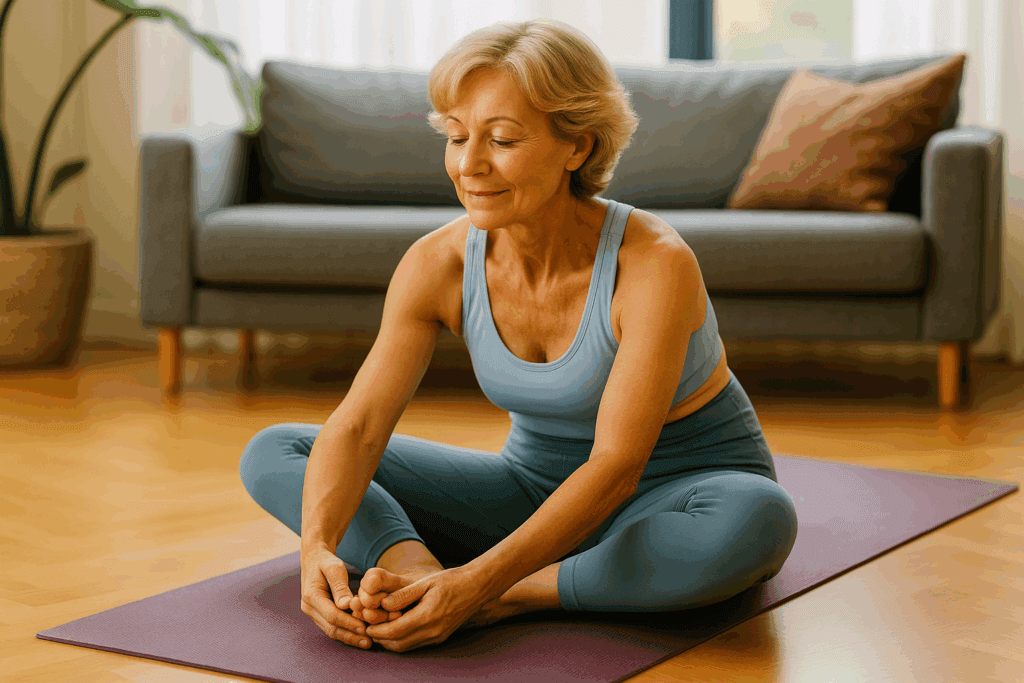
Benefits: Opens hips and inner thighs, reduces tightness from sitting.
- Sit upright, bring soles of feet together.
- Hold feet, gently press knees down with elbows.
Hold 1–2 min, keep spine tall.
7. Supine Spinal Twist — Supta Matsyendrasana (4–5 minutes)
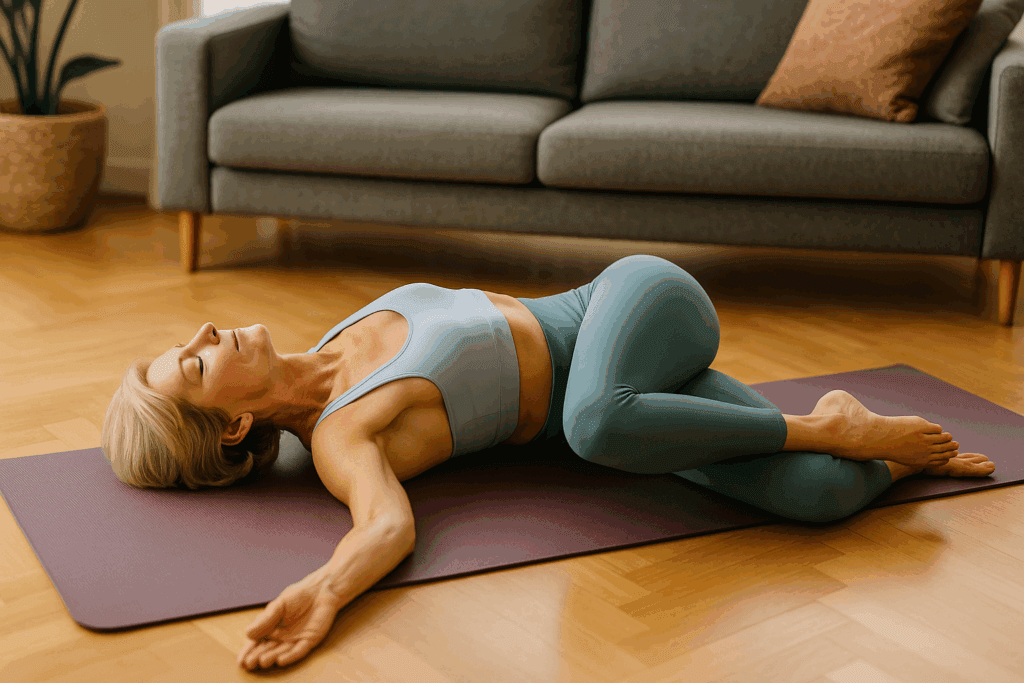
Benefits: Stretches back, shoulders, and obliques. Supports digestion and spinal mobility.
- Lie on your back, draw your right knee to your chest.
- Cross it over to the left, extend the right arm, gaze right.
- Keep shoulders grounded.
Hold 1–2 min. Switch sides.
8. Child’s Pose — Balasana (3–5 minutes)
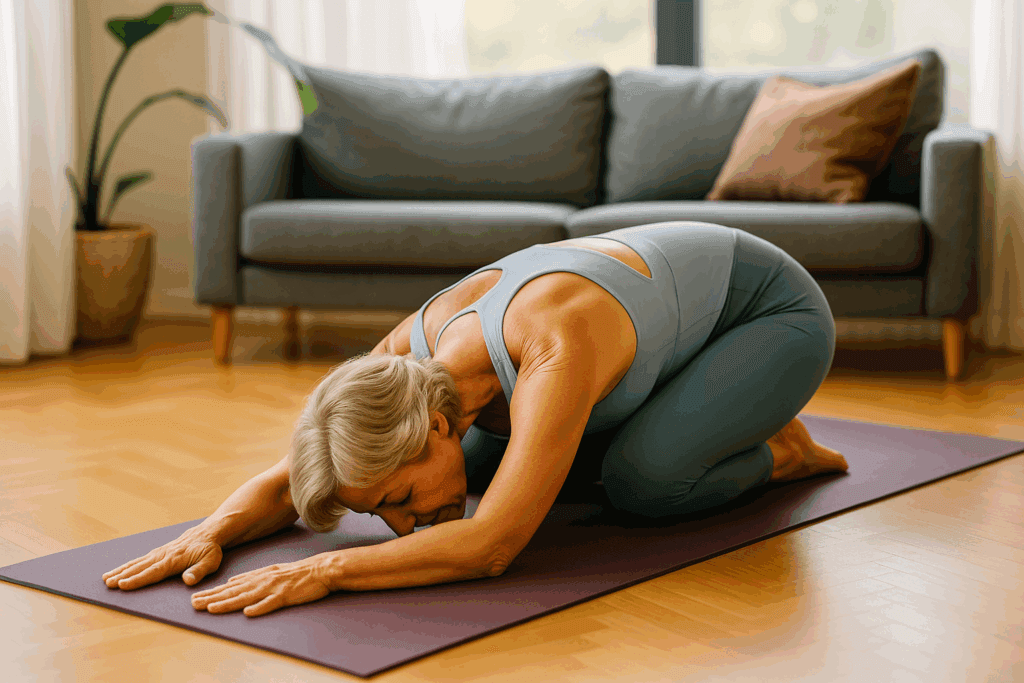
Benefits: Relaxes the nervous system, stretches the spine and hips. Restorative and grounding.
- Kneel, big toes together, knees wide.
- Sit back on heels, arms forward, forehead down.
- Breathe deeply, stay as long as you’d like.
9. Reclined Bound Angle Pose — Supta Baddha Konasana (3–4 minutes)
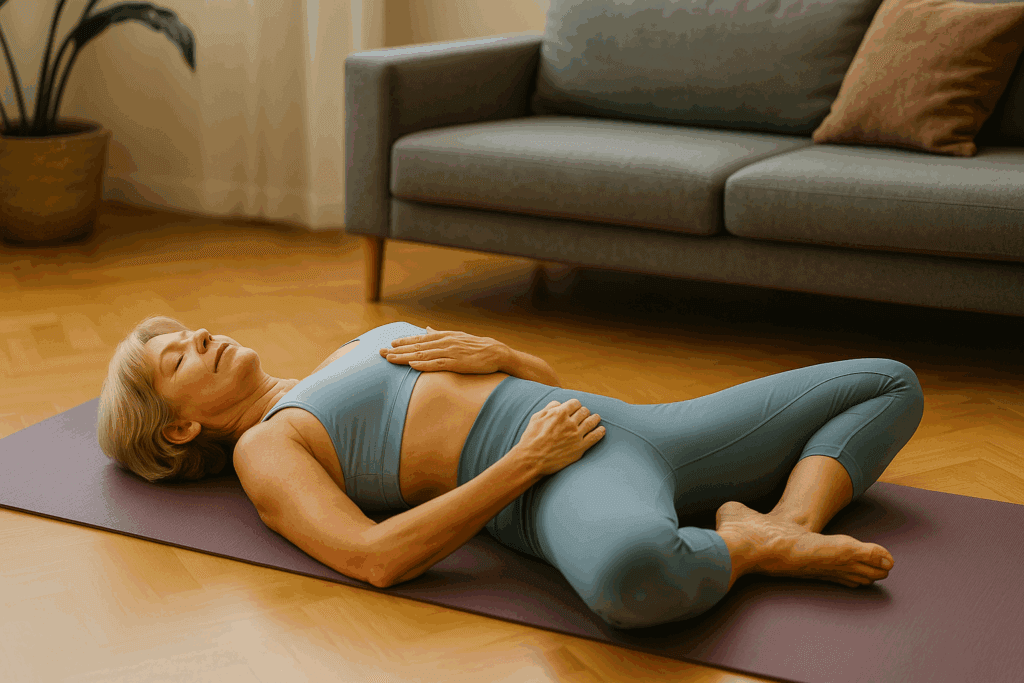
Benefits: Opens hips, calms the mind, relieves stress. Perfect closing posture.
- Lie on back, soles of feet together, knees fall open.
- One hand on heart, one on belly.
- Close eyes, breathe deeply.
Stay 3–4 min.
Tradition & Mindfulness in Practice
Yoga, which means “union” in Sanskrit, is more than stretching. It’s about uniting body, mind, and breath. These gentle postures come from Hatha yoga, a tradition rooted in balance and mindful awareness.
Practicing with intention transforms simple stretches into a mindful ritual. Notice your breath. Feel your muscles lengthen. Observe your thoughts. This mindfulness is where yoga’s true power lies—not just in physical mobility but in emotional grounding and mental clarity.
Tips to Make It Yours
- Move slowly. This is about connection, not speed.
- Breathe intentionally. Inhale through the nose, exhale through the mouth.
- Create a ritual. Light a candle, play calming music, or diffuse lavender oil.
- Support yourself. Use cushions, blocks, or bolsters. This isn’t about “doing it right”—it’s about feeling good.
Final Thoughts
This short, under-30-minute yoga flow isn’t just about moving your body. It’s a daily act of self-care, helping you step into midlife with energy, grace, and calm.
The beauty of yoga is that you don’t have to be flexible to begin. You simply need to show up, roll out your mat, and give yourself permission to move and breathe.
✨ Tomorrow morning, try this practice and notice how much lighter, calmer, and more vibrant your day feels.
✨ Stay vibrant.

About the Author
Kandace Blevin is the author of How to Massage Your Lover, Living the Keto Life, and Connected By Touch, and a senior advertising executive with over 20 years of experience. Through her Vibrant Life blog, she helps midlife women thrive in health, finance, relationships, and personal growth.
✨ Stay connected: Subscribe to the Vibrant Life Newsletter
Leave a Reply